Wat kost een vakantiewoning nou echt? Alle aankoopkosten op een rij!
Ontdek alle verborgen kosten bij het kopen van een vakantiehuis: van overdrachtsbelasting en notariskosten tot BTW en fiscale valkuilen.
Het is zover. Na lang speuren vind je eindelijk een perfecte vakantiewoning. De foto’s zijn veelbelovend, en de prijs lijkt op het eerste gezicht haalbaar. Maar zodra je dieper in het proces duikt, blijkt dat er allerlei extra kosten meespelen. Notariskosten, belastingen en soms zelfs boetes of naheffingen. Veel kopers zijn zich vooraf niet bewust van deze kosten en komen er pas achter als de handtekening is gezet en het te laat is. Dat is zonde – en onnodig. In deze blog geven we je een helder overzicht van de meest voorkomende bijkomende kosten bij de aankoop van een recreatiewoning, zodat je met realistische verwachtingen én een scherpere onderhandelingspositie het proces ingaat.
V.O.N. of K.K.? Klein detail, groot verschil
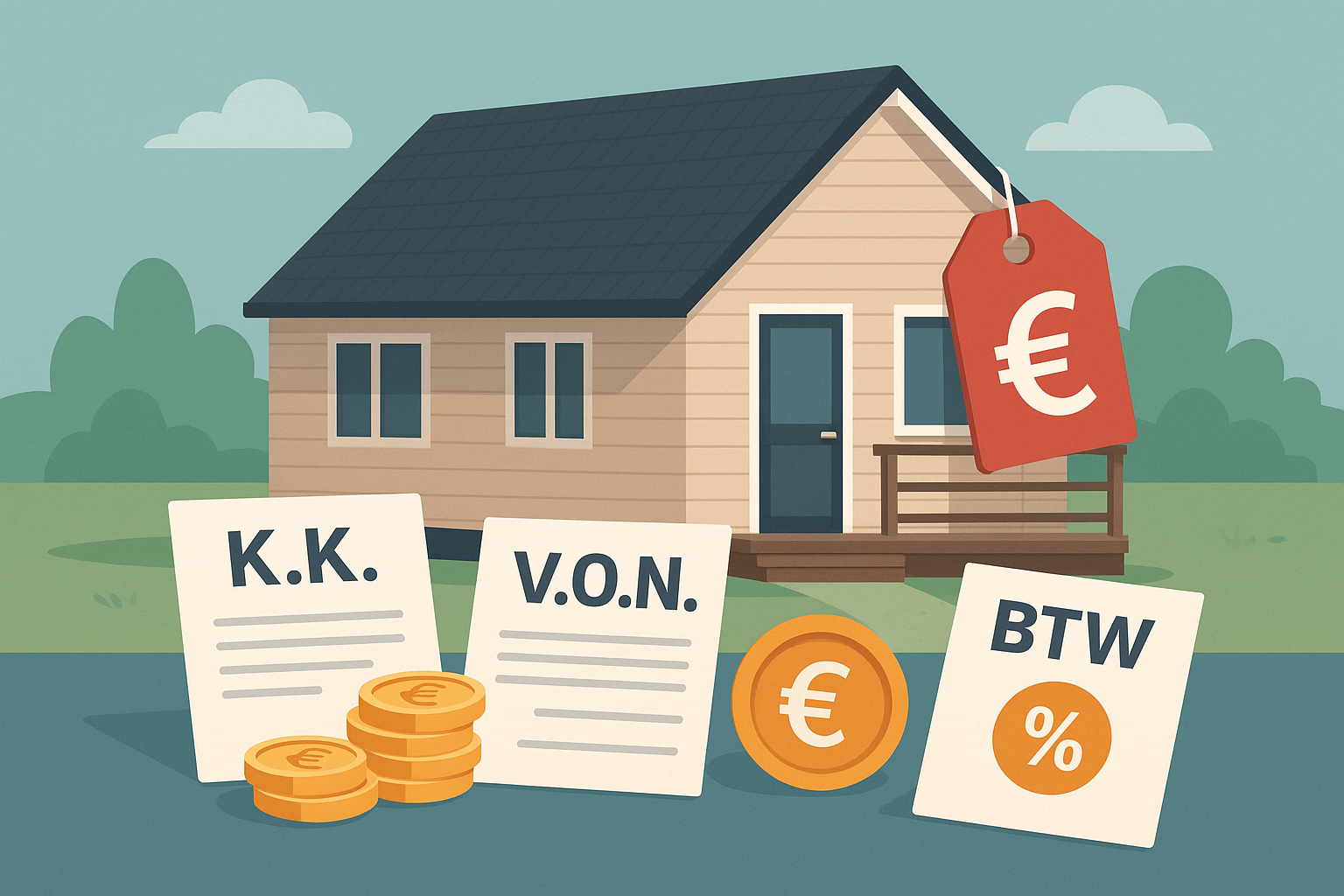
Op Funda of verkoopwebsites zie je vaak termen als V.O.N. (Vrij Op Naam) of K.K. (Kosten Koper). Die paar letters maken een groot verschil voor je portemonnee. Bij V.O.N. zijn eventuele bijkomende kosten als BTW, overdrachtsbelasting en notariskosten inbegrepen in de vraagprijs. Wat je ziet, is wat je betaalt.
Maar bij K.K. komen daar mogelijk nog flink wat kosten bovenop. Denk aan:
- BTW Belasting Toegevoegde Waarde (21% in Nederland)
- Overdrachtsbelasting (momenteel 10,4% bij recreatief gebruik)
- Notaris- en kadasterkosten (€1.500 tot €2.000)
- Inmeetkosten perceel (bij nieuwbouw vaak €700 – €1.000)
Een woning van €250.000 K.K. kan je zomaar €279.000 of meer kosten. Check dus altijd goed wat er wél en niet in de prijs zit inbegrepen.
Overdrachtsbelasting: hoe en wanneer betaal je die?
De hoogte van de overdrachtsbelasting hangt af van de situatie. In 2025 is het tarief 10,4%, maar dit wordt waarschijnlijk 8% in 2026. Er zijn echter veel uitzonderingen en vrijstellingen:
- Samenloopvrijstelling: Koop je een woning die minder dan zes maanden geleden voor het eerst is gebruikt en waarover BTW is betaald? Dan betaal je geen overdrachtsbelasting.
- Roerende zaken (zoals meubels) vallen buiten de heffing. Laat die dus goed gespecificeerd opnemen in het koopcontract om je overdrachtsbelasting zo laag mogelijk te houden.
Grond eerst huren, later kopen: slim of riskant?
We zien geregeld kopers die eerst alleen de vakantiewoning kopen en de grond huren. Pas later besluiten ze de kavel erbij te kopen. Daar is op zich niets mis mee, zolang je maar beseft dat dit fiscaal gevolgen heeft voor je uiteindelijke aankoopprijs. Dit is zeker waar bij de aankoop van een reeds in gebruik genomen woning op huurkavel.
Een roerende zaak, zoals bijvoorbeeld en chalet of stacaravan op huurgrond, is vrijgesteld van overdrachtsbelasting. Een onroerende zaak, zoals een stenen huis, Prefab-woning of gefundeerd chalet op eigen grond is belast met overdrachtsbelasting vanaf het moment dat deze langer dan zes maanden geleden in gebruik genomen is. Simpel gezegd: koop je een nieuw chalet op eigen grond, dan worden de woning met toebehoren en de grond doorgaans zonder overdrachtsbelasting geleverd. Je betaalt hierover wel BTW. . Verkoop je je vakantiewoning en grond binnen zes maanden nadat je deze voor het eerst in gebruik hebt genomen? Dan hoeft de nieuwe koper in principe geen overdrachtsbelasting te betalen. Dit heeft te maken met de zogenaamde samenloopvrijstelling, waarbij een onroerende zaak zonder overdrachtsbelasting kan worden doorverkocht, mits deze doorverkoop binnen zes maanden na eerste ingebruikname plaatsvindt en de initiële verkoop belast is geweest met BTW. Stel, je koopt eerst een vakantiehuis dat al langer dan zes maanden terug in gebruik is genomen en koopt daarna de grond. Deze situatie komt ongelooflijk veel voor en leidt tot veel nare verrassingen. Wanneer je een gebruikte vakantiewoning op huurkavel koopt, dan wordt deze doorgaans verkocht als een roerende zaak, waarbij er dus geen overdrachtsbelasting in rekening wordt gebracht. Echter, als je later de grond erbij koopt, dan kan deze woning ineens als onroerend gezien worden. Het resultaat? Je betaalt gewoon de overdrachtsbelasting over de aankoopprijs van de grond, maar krijgt ook een naheffing in de overdrachtsbelasting over de originele aankoopprijs van de woning. Laat je hierover dus altijd goed adviseren, zodat je een mogelijke naheffing incalculeert in je bod.
BTW: wanneer betaal je het wel – en wanneer juist niet?
Bij nieuwbouw binnen 2 jaar betaal je meestal 21% BTW in plaats van overdrachtsbelasting. Maar verhuur je de woning commercieel? Dan kun je die BTW terugvragen als BTW-ondernemer, zonder dat je hiervoor en KVK-inschrijving doet. Voorwaarde is dat je:
- De woning hoofdzakelijk ter beschikking stelt voor verhuur (min. 90%)
- Je registreert als ondernemer bij de Belastingdienst
- Periodiek BTW-aangifte doet
Let op: verkoop je binnen 10 jaar, dan moet je mogelijk (een deel van) de teruggevraagde BTW terugbetalen (herzieningstermijn). Oplossing? Lever onder de 37D-regeling aan een andere BTW-ondernemer. De herzieningstermijn loopt dan gewoon door.
Roerend goed? Denk aan de KOR
Koop je een stacaravan op huurgrond als BTW-ondernemer? Ook dan kun je de 21% BTW terugvragen. Maar let op: bij doorverkoop moet je die weer afdragen, zelfs na 5 jaar. Tenzij je overstapt op de Kleine Ondernemersregeling (KOR). Dan hoef je géén BTW meer af te dragen en kun je BTW-vrij verkopen.
Zakelijk of privé aankopen?
Koop je op naam van een BV of eenmanszaak, dan pak je een dergelijke investering in een vakantiehuis professioneler aan. Dit heeft enkele voordelen:
- Meer aftrekposten (zoals afschrijving)
- Geen vermogensbelasting BOX 3
Er zijn echter ook nadelen:
- Winst bij verkoop is belast
- Eigen gebruik is beperkt, of je betaalt er dividendbelasting over
- Bij verkoop aan jezelf (privé) betaal je opnieuw overdrachtsbelasting
Koop je als particulier en meld je je aan als BTW-ondernemer, dan zit je flexibeler, maar met minder fiscale aftrek. Wat slim is, hangt af van jouw situatie. Laat je goed adviseren.
Voorkom verrassingen, wees voorbereid
Het lijkt allemaal veel – en dat is het ook. Maar wie weet waar hij op moet letten, staat sterker. Bijkomende kosten kunnen duizenden euro’s schelen. De fiscale regels maken het verschil tussen een slimme investering of een financieel hoofdpijndossier. Leer de termen, stel de juiste vragen en laat je goed begeleiden.
Zelf een vakantiewoning kopen zonder verrassingen?
Wil je zeker weten dat je geen duizenden euro’s over het hoofd ziet bij de aankoop van een vakantiehuis? Laat je dan persoonlijk adviseren door een specialist. Bij Select Vakantievastgoed helpen we je met heldere berekeningen, eerlijke vergelijkingen en inzicht in alle kosten – vóórdat je tekent. Neem vrijblijvend contact met ons op of bekijk het actuele aanbod op www.selectvakantievastgoed.nl
Lees ook deze updates
Bekijk alle updates